Shop Menu
🚀 5% OFF Your First Order. Use Code FIRSTORDER5 🚀
Shop Menu
🚀 5% OFF Your First Order. Use Code FIRSTORDER5 🚀

When choosing your wheel chocks, it is important to know exactly what size you need. Follow these simple 5 wheel chock size rules:
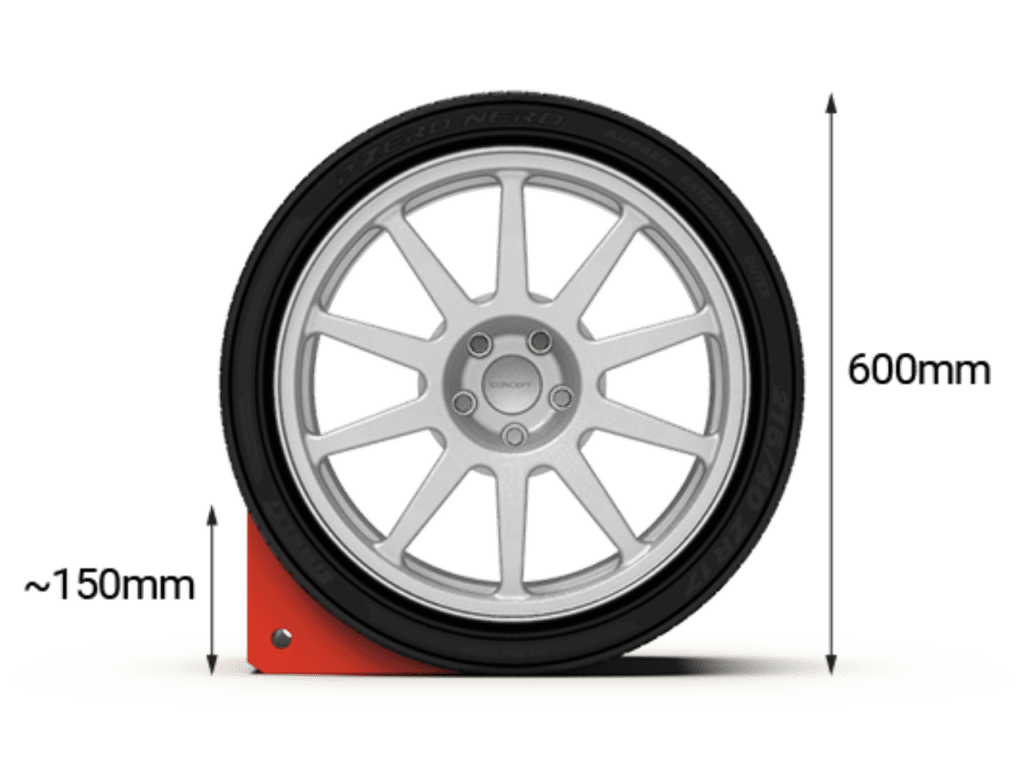
Chocks should be placed in the centre of, and square to, the tyre as illustrated below.

Step 1: Get the Right Chocks for the Right Hob
Don’t try to improvise a chock using random materials you have on hand. Get the chocks that are suited for the job you need to do. Make sure you have enough chocks to secure all potentially-unstable wheels.
Step 2: Put the Car, Truck, or Motorcycle into the Park
If at all possible, parking on a flat surface is best. If you’re on a loading dock, park as close to the dock as possible.
Step 3: Observe
Which way the wheels of the vehicle on the axle you are not lifting are likely to roll, once you lift the other axle.
Step 4: Wedge the Chocks Under the Backs of the Wheels
That is furthest from the side you’re lifting. Kick or use a tool to push the chock firmly under the wheel.
Step 5: Place Additional Chocks on the FRONTS of the Wheels
Place the additional chocks on the axle you won’t be lifting, for maximum security.

Size. We have Wheel Chocks that suit light vehicles, heavy vehicles and extra-large Mining machinery. We have the size dimensions listed under each Wheel Chock to help you choose the correct one.
Our wheel chock sizes are as follows:
Suited for Light Vehicles
5T
Suited for Heavy Vehicles
20T
20TD
30T
40T
Suited for Large Mining Machinery
60T
250T
400T

There are three things to know about choosing the right wheel chocks.
1. Know your Job:
Are you lifting a vehicle to tow it? or hauling a vehicle on a flatbed? or storing a motorcycle? Different jobs require different kinds of chocks.
2. Know your Surface:
Whether a surface is flat or steeply inclined, gravelly or smooth, soft mud or hard concrete, there are chocks that you can use to stabilize a vehicle. Make sure you choose the chocks that suit the environment of the job.
3. Know the Vehicle Stats:
If you know how heavy a vehicle is and the size of its tyres, you will avoid accidentally damaging tyre chocks by surpassing their WLL or overloading a small chock with a big tyre

i. Steepness of a Chock’s Incline (or curve):
A steeper chock can be wedged in more firmly and use gravity to its advantage, but it can also be more challenging to place–especially if the ground itself is a steep incline.
ii. Working Load Limit:
Do not exceed a wheel block’s working load limit.
iii. Height and Diameter:
Height and diameter of the curve (if applicable). This one’s straightforward: taller chocks work with taller tyres, and shorter chocks work with shorter tyres.
To read more about Wheel Chock compliance, CLICK HERE
“Vehicles that are not immobilised properly can pose serious risks to workers and others. Vehicle roll-aways result in a significant number of serious injuries and fatalities in Australia each year.
Roll-aways can occur with any type of mobile plant including cars, forklifts, trucks, tractors, trailers, passenger vehicles and heavy machinery. Roll-aways can occur on worksites, car parks, maintenance yards or when a vehicle is parked on the side of the road.
When vehicles that have not been safely immobilised roll-away, a person could be hit, crushed, trapped or run over, leading to serious injuries or fatalities. Injuries can also occur when a person tries to enter or exit a vehicle that has begun to roll-away.”

Examples of control measure combinations used to prevent vehicle roll-aways

Please enter your details and we will get back to you with a quote and freight cost.
