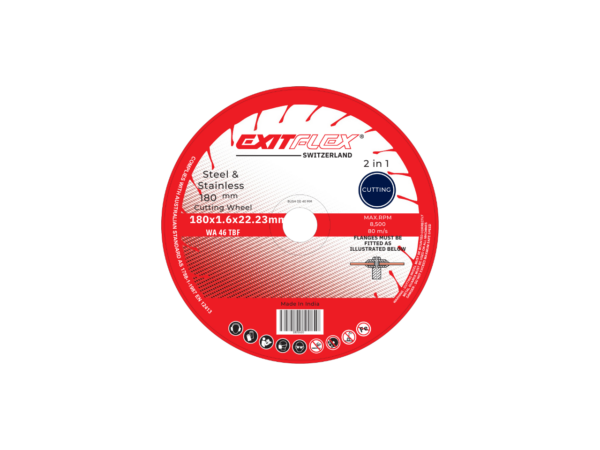
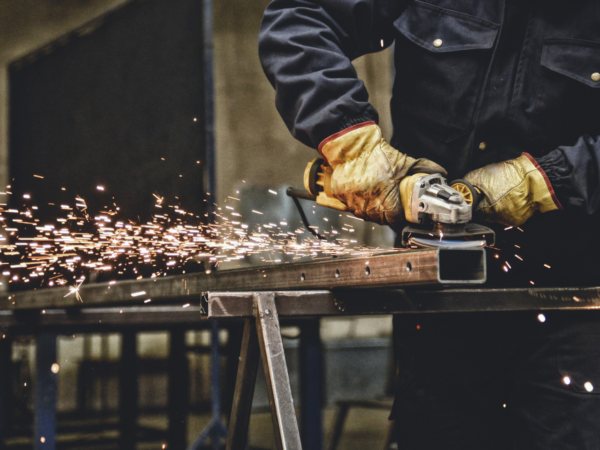
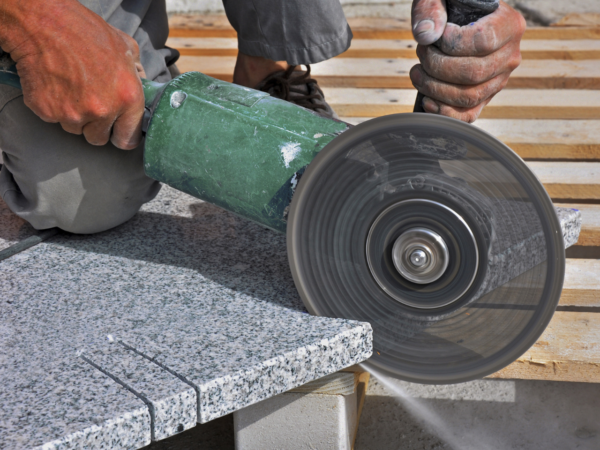
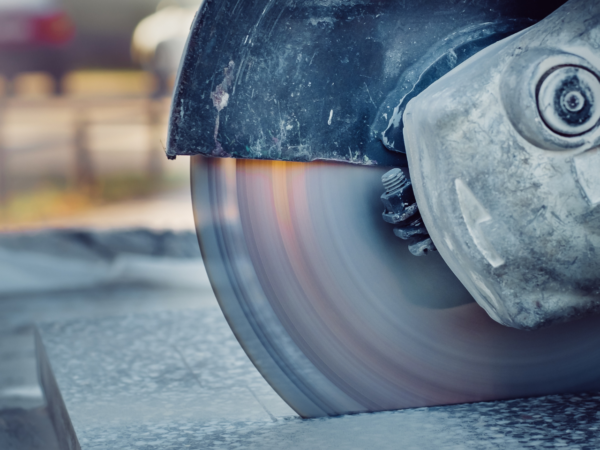
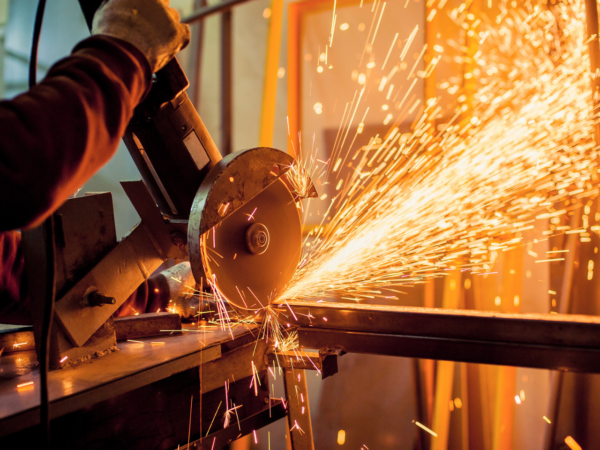
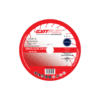
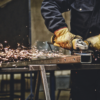
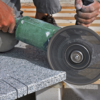
EXITFLEX cutting wheels have a minimum disc thickness of 1mm and a maximum thickness of 3mm. They have excellent cutting properties, great stability and minimum burr formation.
Cutting Wheel sizes available (width x thickness):
- 125mm x 1.0mm – suits a 5′ grinder – Box qty: 50
- 125mm x 1.6mm – suits a 5′ grinder – Box qty: 50
- 125mm x 3.0mm – suits a 5′ grinder – Box qty: 50
- 180mm x 1.6mm – suits a 7′ grinder – Box qty: 100
- 230mm x 1.9mm – suits a 9′ grinder – Box qty: 25
- 230mm x 3.0mm – suits a 9′ grinder – Box qty: 25
- 355mm x 3.0mm – suits a 14′ grinder – Box qty: 25
- 405mm x 3.2mm – suits a 16′ grinder – Box qty: 15
Typical Applications for Cutting Wheels:
- structural steel
- shipyards
- steelwork
- plant construction
- metal works
- vehicle construction
- trailer manufacturers
- mining sites
Typical materials you can use Cutting Wheels for:
- steel
- stainless steel
- construction steel
- non-ferrous metals
- cast materials
- pipes
- flat iron
- tins
- solid materials
EXITFLEX offers professional advice on selecting the right cutting wheel for your applications and also offers trials at your site. Our technical advisors would happily offer any technical assistance or help with a specific problem.
FAQs
Does it matter which way a cutting disc goes on a grinder?
Ensure the obviousness of this fact, as the prevalence of incorrect mounting is high and can lead to severe harm. Prior to all else, verify that the grinder is disconnected from any power source. Utilize the designated flange that corresponds with the machine, and inspect it for cleanliness, absence of burrs, and any signs of damage. In the case of flat cutting discs, properly attach the flange with the flat side facing the wheel.
Why do my cutting discs keep breaking?
When your cut-off wheel gets pinched by the weight of the steel in a cut it will blow your discs apart. Imagine cutting down a tree with a chainsaw, and the weight of the tree clamps the bar and stops the saw. Other factors include bad storage, incorrect selection of a wheel, improper mounting, excessive out-of-balance conditions, excessive speed, grinding machine defects, and malpractices in the grinding operations are all factors that can result in breakage.
When should I stop using my cutting disc?
- Chipping on the disc
- Burn marks on the disc
- When the disc cuts very slowly
- When it starts making unusual sounds
- If there are any missing teeth
Do metal-cutting discs have an expiry date?
Good quality discs typically bear an expiration date that is imprinted somewhere on them. You can usually find it on the central metal ring or directly on the disc. In some cases, it may be presented on a label affixed to the disc. Remember, this date indicates the recommended period for usage and must not be surpassed.
What thickness cutting disc should I use?
Metal cutting discs are ideal for slicing through metal and come in various thicknesses, as detailed later. To handle routine tasks on stainless or mild steel, select a cutting disc with a thickness of either 1mm or 1.6mm. If you need to cut thin sheet metals, go for a disc with a thickness of 1mm or 0.8mm.