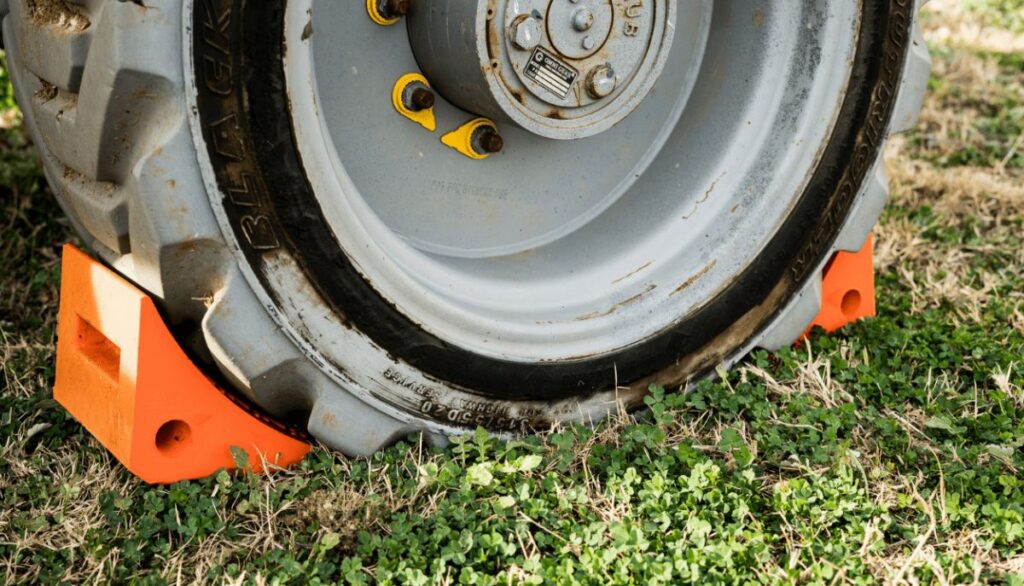
Wheel chocks are one of the simplest yet most essential pieces of site safety equipment. These small but powerful devices prevent vehicles, trailers and heavy machinery from rolling or shifting when stationary. While they may look straightforward, choosing the wrong chock or using it incorrectly can create serious risks, from vehicle damage to life-threatening accidents.
Every site has unique conditions, whether it’s a logistics yard, mining site, construction zone or warehouse. To maximise safety and compliance, it’s crucial to select wheel chocks tailored to your specific environment, vehicle type and operational needs.
This guide walks you through everything you need to know about selecting the right wheel chocks for your site conditions, from understanding terrain and vehicle requirements to materials, placement and ongoing maintenance.
Why Wheel Chocks Matter
Wheel chocks provide a physical barrier that prevents vehicles and equipment from moving unintentionally. Even when parking brakes are applied, factors such as sloping ground, uneven surfaces, vibrations or equipment failure can cause dangerous rollaways.
Key reasons wheel chocks are critical include:
Safety: Protects workers, operators and pedestrians from unexpected vehicle movement.
Compliance: Many industries, including transport, mining and warehousing, are governed by strict safety regulations that require chock use.
Asset Protection: Prevents costly damage to vehicles, trailers and site infrastructure.
Operational Continuity: A stable and secure vehicle allows for safe loading, unloading or servicing without downtime.
Step 1: Assess Your Site Conditions
Every site presents unique challenges that affect which chocks will perform best. Consider the following factors:
Terrain Type
Hard surfaces (concrete, asphalt, steel): Rubber or polyurethane chocks provide excellent grip and durability.
Soft or unstable surfaces (gravel, sand, mud): Chocks with cleated, spiked or serrated bases dig into the ground for extra hold.
Wet, icy or slippery conditions: Opt for chocks with aggressive tread patterns or anti-slip coatings.
Inclines and Slopes
The steeper the gradient, the greater the risk of rollaway. On slopes, chock selection and placement become especially important:
Uphill: Place chocks behind the rear wheels.
Downhill: Place chocks in front of the front wheels.
Level surfaces: Always chock both sides of at least one wheel for maximum stability.
Environmental Exposure
If your site is exposed to extreme temperatures, heavy rainfall or corrosive chemicals, choose materials that can withstand those conditions (e.g., polyurethane for chemical resistance, aluminium for rust resistance).
Step 2: Match Chocks to Vehicle Size and Weight
Not all chocks can hold every vehicle. Choosing the correct size and load capacity is non-negotiable.
Vehicle Weight
Wheel chocks are rated according to the gross vehicle weight (GVW) they can support.
Always account for payload, don’t just use the vehicle’s empty weight.
Heavy mining trucks, for example, require much stronger chocks than delivery vans or light trailers.
Tire Size
A practical rule of thumb: the height of the wheel chock should be at least 25% of the tire height.
Larger tires require taller and wider chocks to create enough stopping power.
Vehicle Type
Light commercial vehicles and utes: Rubber or polyurethane chocks are typically sufficient.
Heavy trucks and trailers: Larger rubber or alloy chocks with high load ratings.
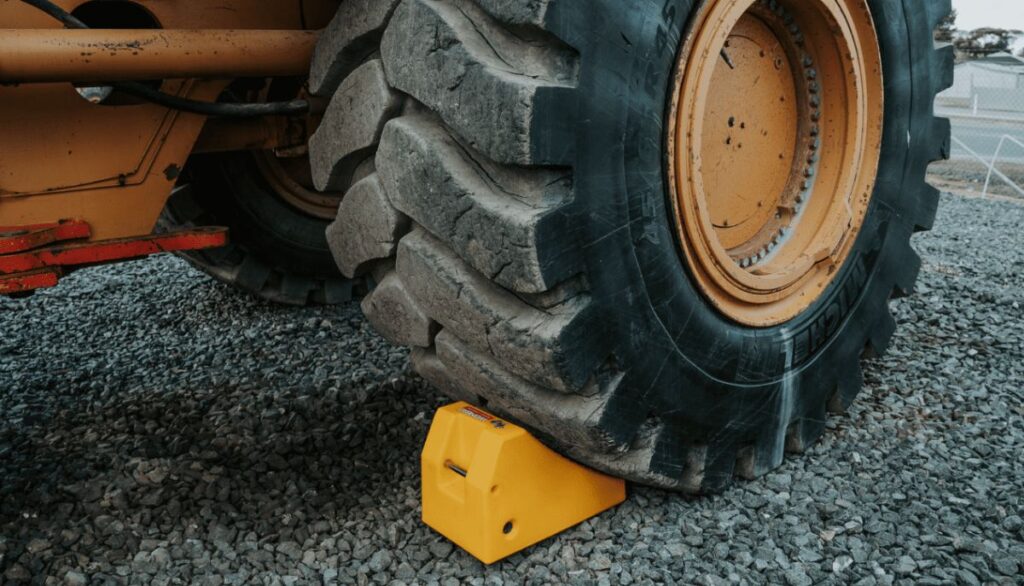
Mining and earthmoving equipment: Oversized steel or heavy-duty polyurethane chocks designed for extreme loads.
Aircraft and specialised vehicles: Often require specific aviation-grade chocks for compliance.
If you need help choosing the right size, contact our expert team to discuss your needs.
Step 3: Choose the Right Material
The material of the wheel chock greatly influences performance, durability and suitability for different environments.
Rubber
Pros: High grip, durable, shock-absorbing and cost-effective.
Best for: General transport, warehouse and logistics operations on concrete or asphalt.
Considerations: Heavier compared to other materials; can degrade with constant chemical exposure.
Polyurethane
Pros: Lightweight, weather-resistant, chemical-resistant and non-conductive.
Best for: Harsh environments, aviation, mining and chemical plants.
Considerations: Usually more expensive than rubber.
Aluminium
Pros: Lightweight, strong, corrosion-resistant and easy to handle.
Best for: Heavy vehicles and outdoor conditions where portability matters.
Considerations: Less grip on smooth concrete unless fitted with rubber pads or serrated bases.
Steel
Pros: Extremely strong and durable, excellent for very heavy loads.
Best for: Industrial or mining applications with extreme weight demands.
Considerations: Susceptible to rust if untreated, heavier to handle, may damage floors.
Step 4: Consider Special Features for Extra Safety
Modern wheel chocks are designed with features that improve performance and usability. Look out for:
Textured bases: Serrated or cleated designs enhance grip on soft or uneven terrain.
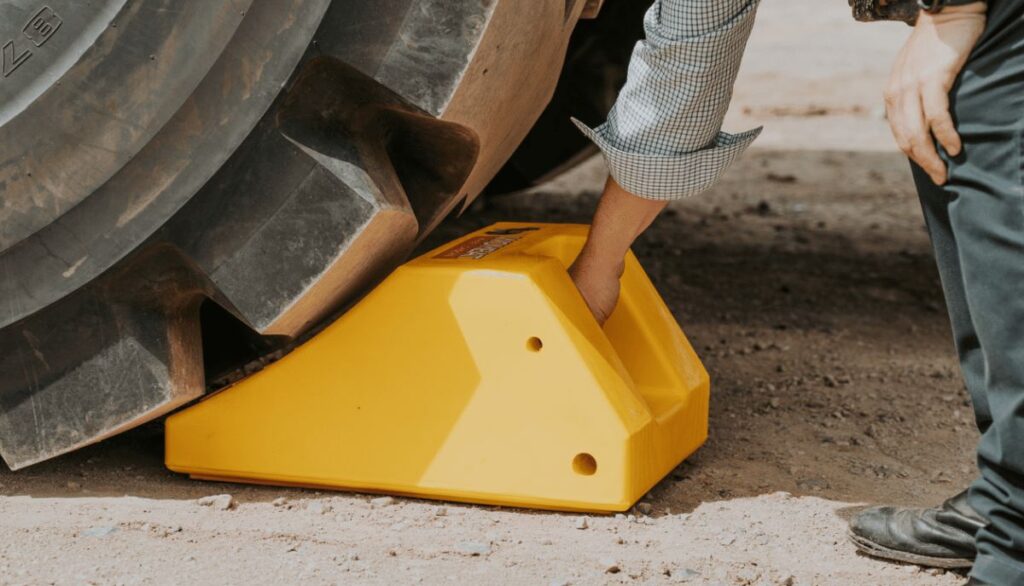
Handles and ropes: Make chocks easier to carry and retrieve, especially for larger models.
High-visibility colours: Bright yellow, orange or reflective strips improve visibility, especially in low-light conditions.
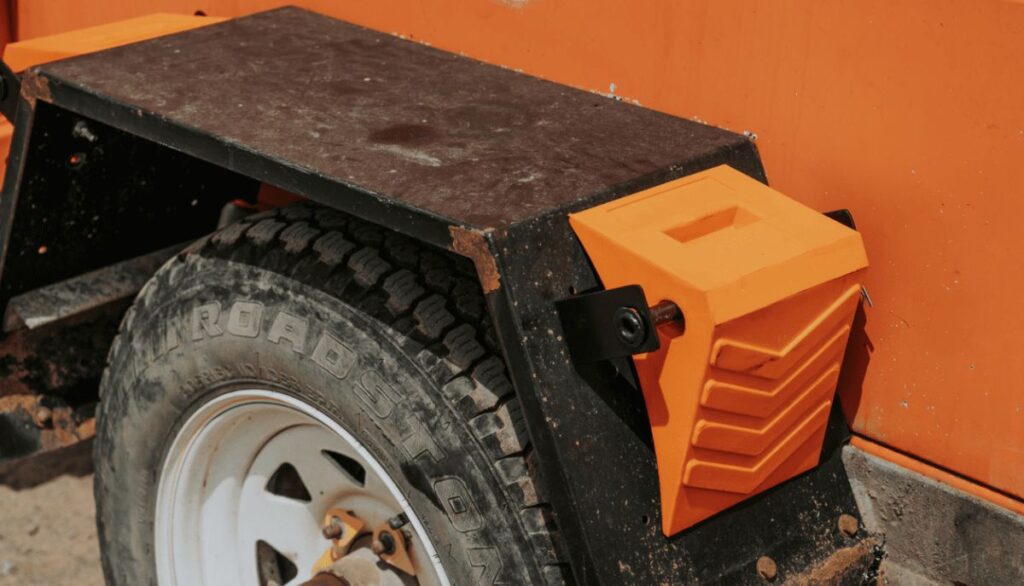
Mounting brackets: Useful for secure on-vehicle storage when chocks are not in use.
Stackable design: Allows for efficient storage and transport.
Step 5: Proper Placement and Usage
Even the best wheel chock can’t prevent accidents if used incorrectly. So it’s important to follow these practices:
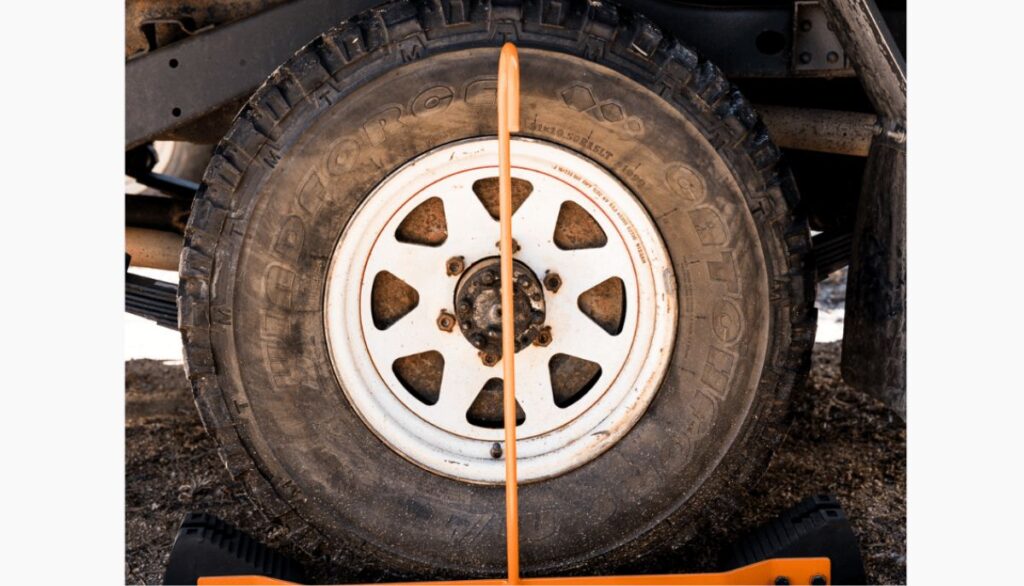
Always use at least two chocks, one in front and one behind the wheel.
Position snugly against the centre of the tire tread, not at an angle.
Chock the correct wheels depending on the slope direction.
Apply the parking brake first, then add chocks as a secondary safety measure.
Train staff in correct chocking procedures as part of your site’s safety protocols.
Step 6: Inspection and Maintenance
Wheel chocks are a safety equipment and require regular inspection:
Check for cracks, chips or deformation, and replace immediately if compromised.
Clean surfaces regularly to maintain traction and prevent dirt buildup.
Store in a dry, shaded place when not in use to extend lifespan.
Replace periodically according to manufacturer recommendations or after heavy wear.
Compliance and Industry Standards
Depending on your sector, regulations may dictate wheel chock use. For example:
Mining & Resources: Strict site safety protocols require heavy-duty chocking solutions for trucks and machinery.
Transport & Logistics: Regulations may require all trucks to be chocked during loading and unloading.
Aviation: Aviation chocks must meet specific standards for aircraft weight and wheel size.
Always confirm that your wheel chocks comply with local and industry-specific safety requirements (such as OSHA, MSHA or Australian Standards).
Quick Reference Guide
When selecting wheel chocks, it helps to match the product directly to your site conditions and vehicle requirements. Here are some practical recommendations:
Concrete or Asphalt: Rubber or polyurethane chocks provide excellent grip and durability for stable, hard surfaces.
Gravel, Mud or Sand: Soft or shifting ground requires chocks with cleated or serrated bases that can dig in for added traction.
Icy or Wet Surfaces: Conditions that reduce friction are best managed with rubber or textured polyurethane chocks that deliver strong anti-slip performance.
Light Vehicles: For utes, vans or smaller trucks, lightweight rubber or polyurethane chocks are easy to handle while still providing reliable stability.
Heavy Trucks: Large rubber or aluminium chocks are more suitable for the greater weight and larger tire dimensions.
Extreme Loads (Mining or Earthmoving Equipment): Steel or heavy-duty polyurethane chocks are built to withstand the immense loads of mining haul trucks and heavy machinery.
Harsh Chemical Environments: Polyurethane chocks perform best in areas where exposure to fuels, oils or corrosive substances is common.
Low-Light Conditions: High-visibility or reflective chocks ensure workers can quickly spot and position them, improving safety during night operations or in dimly lit environments.
Common Mistakes to Avoid
Using undersized chocks that cannot support the vehicle’s weight.
Chocking only one wheel instead of both sides.
Placing chocks incorrectly (not aligned with the tire).
Ignoring slope direction, which reduces effectiveness.
Neglecting inspections, leading to worn or unsafe chocks in use.
Training and Best Practices for Safe Chock Use
Even the most robust wheel chocks cannot prevent accidents if they are used incorrectly or inconsistently. To get the maximum benefit from your investment, it’s essential to establish clear safety protocols and train staff properly.
Develop Standard Operating Procedures
Create a step-by-step guide for when and how chocks should be used. This should include:
Applying the handbrake before placing chocks.
Positioning chocks snugly against the wheel tread.
Using two chocks per vehicle, even on level ground.
Removing chocks only after it is safe to move the vehicle.
Conduct Regular Training
Incorporate wheel chock training into site induction programs and toolbox talks. Reinforce correct usage through periodic refresher sessions, particularly for new team members or contractors.
Assign Responsibility
Make it clear who is responsible for chocking vehicles, whether it’s drivers, operators or site staff, so there is no confusion or oversight.
Use Visual Reminders
Signage at loading bays, depots and parking zones can be simple but effective reminders. Many companies also use “chock and lock” tags or key exchange systems to ensure vehicles cannot be driven until chocks are safely removed.
Encourage a Safety-First Culture
Perhaps most importantly, foster a workplace culture where safety comes before speed or convenience. Workers should feel empowered to stop a process if chocks are missing, damaged or incorrectly placed.
By investing in training and embedding best practices, you not only reduce the risk of rollaway accidents but also build consistency and confidence in your team’s daily operations.
Safety Starts with the Right Choice
Wheel chocks may seem like a small part of your safety strategy, but they play a vital role in preventing accidents, protecting assets and ensuring compliance. The “right” chock is not a one-size-fits-all product; it must be chosen based on site terrain, vehicle size and weight, environmental exposure and regulatory requirements.
By investing in high-quality, site-appropriate chocks and enforcing correct usage practices, you safeguard your workforce and operations. Whether you’re working on a construction site, in transport logistics or managing heavy mining equipment, the correct chocks can make the difference between a secure operation and a costly incident.
At Advance Global, we supply a full range of durable, industry-tested wheel chocks, including our trustedWombat Wheel Chocks, engineered for Australian conditions. Explore our range today and ensure your site is protected with the right safety equipment.
Get a Quote
Please enter your details and we will get back to you with a quote and freight cost.