Shop Menu
🚀 5% OFF Your First Order. Use Code FIRSTORDER5 🚀
Shop Menu
🚀 5% OFF Your First Order. Use Code FIRSTORDER5 🚀

Enhancing Performance and Protection in Mining and Fleet Environments
Safety and equipment longevity are two non-negotiable pillars of operational success in high-risk environments such as mining sites and fleet vehicle depots. Thermal insulation blankets, often underestimated in industrial asset protection, are proving to be essential for meeting Work Health and Safety (WHS) standards and maintaining compliance with Mining Design Guidelines like MDG15. These engineered solutions provide a critical layer of safety and durability for machinery exposed to extreme heat, volatile work conditions and harsh Australian climates.
This article explores the core advantages of thermal insulation blankets, focusing on their application in mining and heavy-duty fleet operations, their role in compliance with WHS and MDG15, and their long-term impact on reducing risks and extending equipment life.
Thermal insulation blankets are removable, reusable covers made from high-temperature resistant materials, designed to contain and manage heat emitted from machinery. Custom-fitted for components such as exhaust systems, turbochargers, manifolds and piping, these blankets reduce surface temperatures, prevent radiant heat damage, and contain flammable fluids from igniting.
In high-risk industries, uncontrolled heat exposure is more than just a maintenance concern; it’s a safety hazard. When machine components exceed safe temperatures, they present ignition risks for oil or fuel leaks, burn risks to personnel and overall accelerated wear of adjacent equipment. Thermal blankets act as a barrier against these dangers.
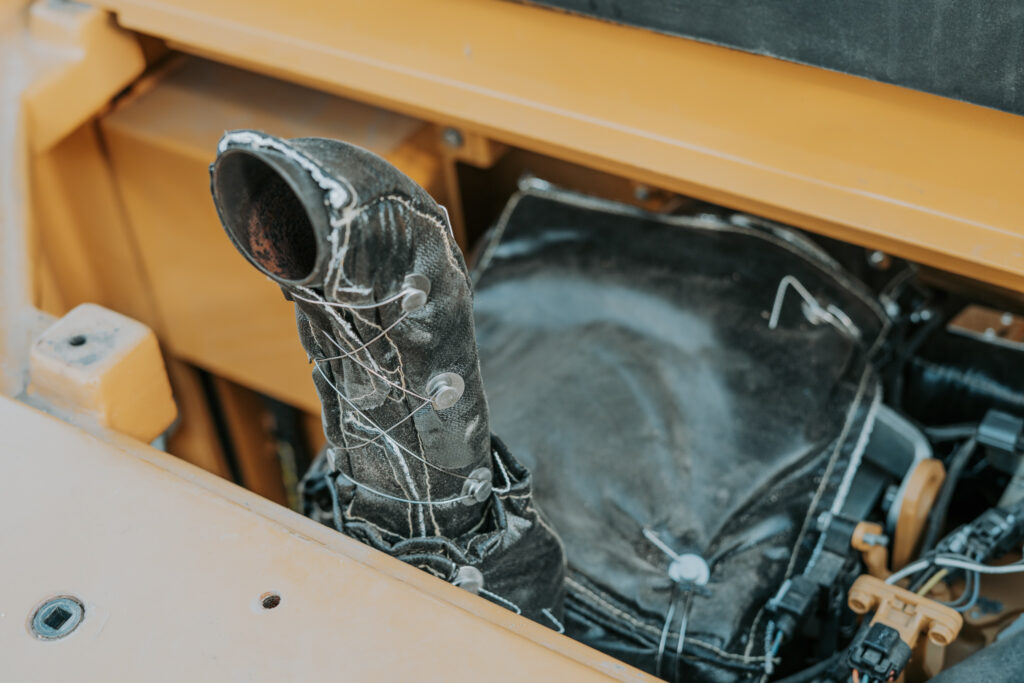
One of the foremost advantages of insulation blankets is their ability to significantly reduce surface temperatures on hot engine and exhaust components. In mining environments where technicians and operators frequently work around mobile plant or stationary engines, accidental contact with exposed parts can cause severe burns.
By maintaining lower external surface temperatures, thermal blankets create a safer work zone and reduce the likelihood of injury, a key objective in any high-risk industry.
In both underground and surface mining operations, fire is one of the most catastrophic risks. Exposed hot components can ignite oil, hydraulic fluid or fuel vapours if insulation is inadequate or missing.
In fleet operations, particularly those involving diesel vehicles or high-speed transport machinery, thermal blankets reduce under-bonnet temperatures, decreasing fire risk due to fluid leaks, electrical shorts or fuel line ruptures.
High temperatures not only pose safety risks but also accelerate the degradation of surrounding components. Wiring looms, sensors, hoses and nearby electronics are particularly vulnerable to heat exposure, leading to premature failures.
Thermal blankets provide insulation that:
Over time, this heat management translates into less wear and tear, reduced breakdowns and improved overall equipment longevity, critical for mining vehicles operating under extreme load conditions.
Managing engine and exhaust temperatures improves safety and directly affects operational performance.
This is particularly important in mining, where machine downtime costs thousands of dollars per hour, and in fleet operations where fuel efficiency impacts bottom-line profitability.
Uncontrolled heat exposure can lead to cracked manifolds, failed gaskets and melted cabling, all of which require costly repairs and increase machine downtime. By using thermal insulation blankets:
In mission-critical industries like mining, where every minute of downtime affects production, thermal blankets pay for themselves many times over.
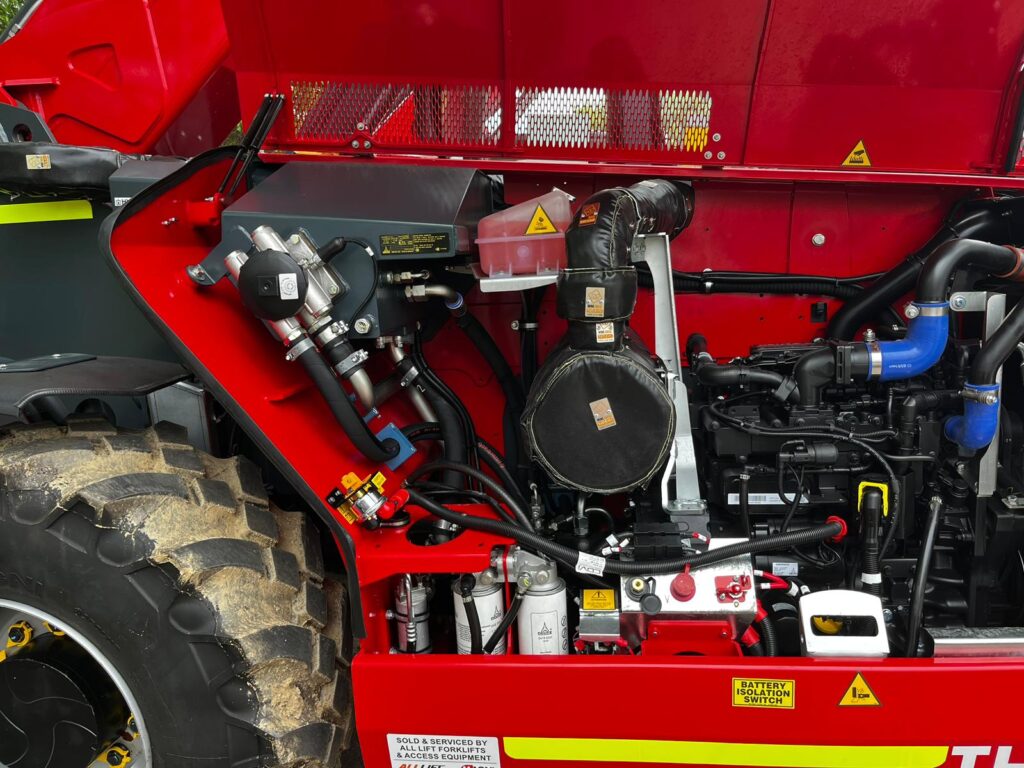
Australia’s WHS laws require companies to identify hazards, assess risks and implement controls to eliminate or reduce danger. Heat exposure, particularly from exhaust systems, is a recognised hazard in the workplace.
Thermal blankets serve as an engineering control, one of the most effective forms of risk mitigation under the WHS hierarchy of controls. Rather than relying solely on administrative controls (like signage or PPE), insulation blankets offer a physical safety barrier that doesn’t depend on human behaviour.
By proactively installing thermal insulation blankets, mining and fleet operators demonstrate their commitment to a safe work environment and align with WHS best practices.
MDG15: Guideline for Mobile and Transportable Equipment for Use in Mines was created by the NSW Resources Regulator to enhance safety standards in the mining industry. Section 4.3 and 4.4 focus specifically on high-temperature equipment:
Thermal insulation blankets are a recognised and effective solution to achieve these two critical safety directives.
Additionally, the use of compliant and tested thermal insulation products improves audit readiness, helps gain approvals for mine site entry and streamlines risk assessments conducted by site safety officers.
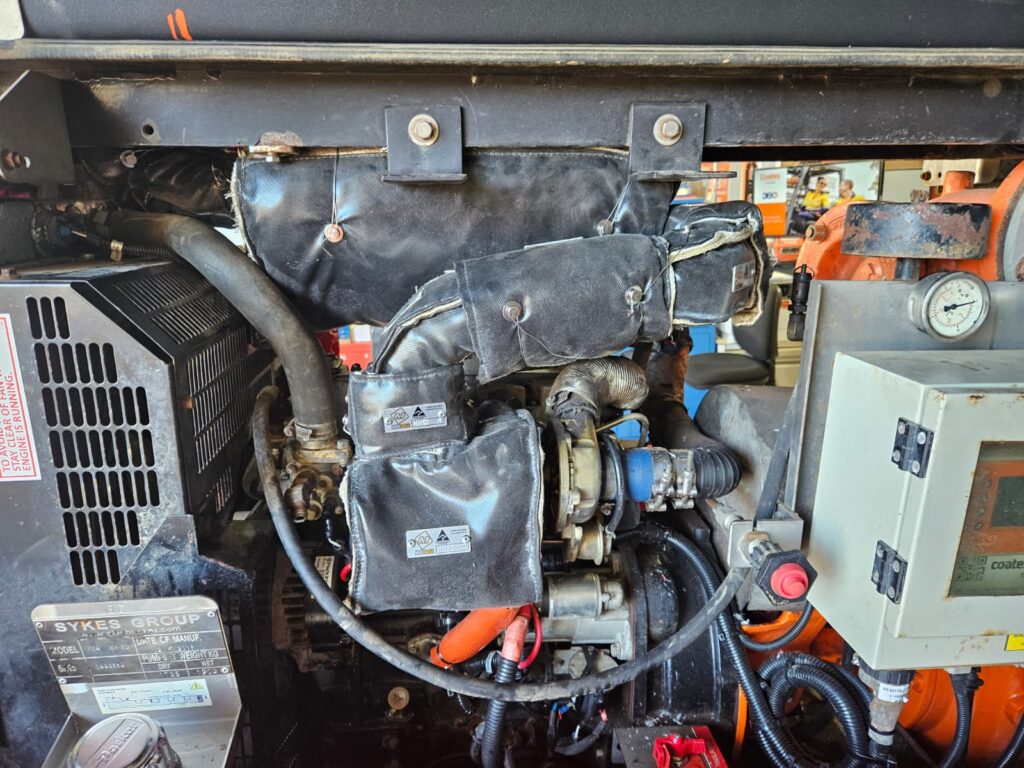
From loaders and excavators to haul trucks and underground LHDs, mining vehicles operate in high-duty cycles with minimal tolerance for failure. Key thermal risk areas include:
Insulation blankets shield these components, protect operators and prevent thermal issues that could escalate into full-blown emergencies.
In underground operations, confined ventilation and flammable atmospheres heighten the importance of heat control. Many mine sites now mandate the use of thermal blankets on exposed engine parts before granting access.
Advance Global provides custom-fitted, flame-retardant insulation solutions suitable for underground conditions, ensuring MDG15 compliance and maximum safety.
Diesel fleet vehicles, including trucks, buses and construction machinery, benefit from reduced under-hood temperatures when thermal blankets are installed on turbo systems and exhausts. In transport depots or workshops where multiple vehicles run simultaneously, temperature build-up can be significant. Insulation blankets reduce that cumulative heat and support workplace safety.
Not all insulation products are created equal. For use in mining and high-risk applications, thermal insulation blankets should be:
At Advance Global, every thermal blanket is designed with precision fit, WHS compliance and rugged durability in mind, ensuring they stand up to the demands of heavy industry.
A Queensland-based open-cut mine recently partnered with Advance Global to install thermal blankets on their haul truck fleet. The problem: excessive heat exposure was causing repeated failures in wiring harnesses and turbo-related components.
After installing custom-fitted thermal blankets on over 20 vehicles, the site reported:
Additionally, their site safety audit noted full MDG15 compliance in thermal protection, enhancing the mine’s operational approval score.
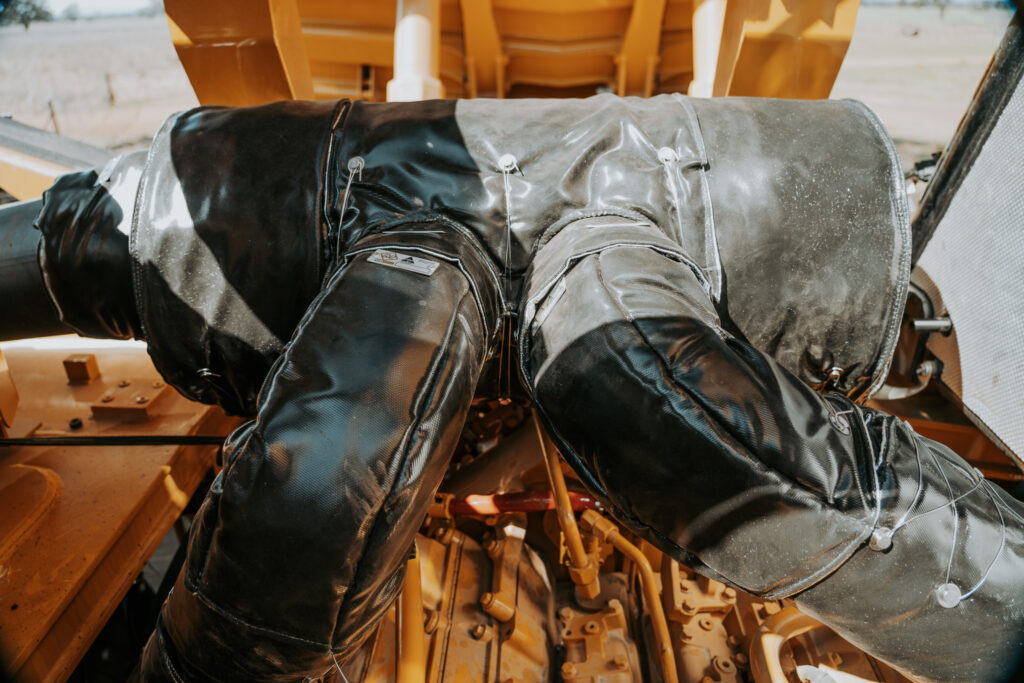
Thermal insulation blankets are not just accessories, they are critical safety components that protect workers, reduce fire risk and extend equipment lifespan in harsh industrial environments.
In high-risk industries like mining and heavy fleet operations, where thermal hazards are ever-present and compliance is mandatory, these blankets provide a practical, effective and compliant solution.
Advance Global’s range of Australian-made, site-tested thermal blankets is trusted by mine operators and fleet managers nationwide to deliver on both performance and safety, ensuring assets stay productive and people stay protected.
Get in touch with Advance Global today to discuss tailored thermal insulation solutions for your machinery and site requirements. Our team will help you meet WHS and MDG15 compliance while maximising uptime and minimising risk.
Contact us now for a free consultation and thermal risk assessment.

Please enter your details and we will get back to you with a quote and freight cost.
