Shop Menu
🚀 5% OFF Your First Order. Use Code FIRSTORDER5 🚀
Shop Menu
🚀 5% OFF Your First Order. Use Code FIRSTORDER5 🚀

Diesel Particulate Filters (DPF’s) and Catalytic Purifiers are some of the solutions widely used in the industry to reduce emissions. Catalytic Purifiers are used to reduce harmful gases and change their composition via a reaction within the catalyst to make them less harmful in the working environment.
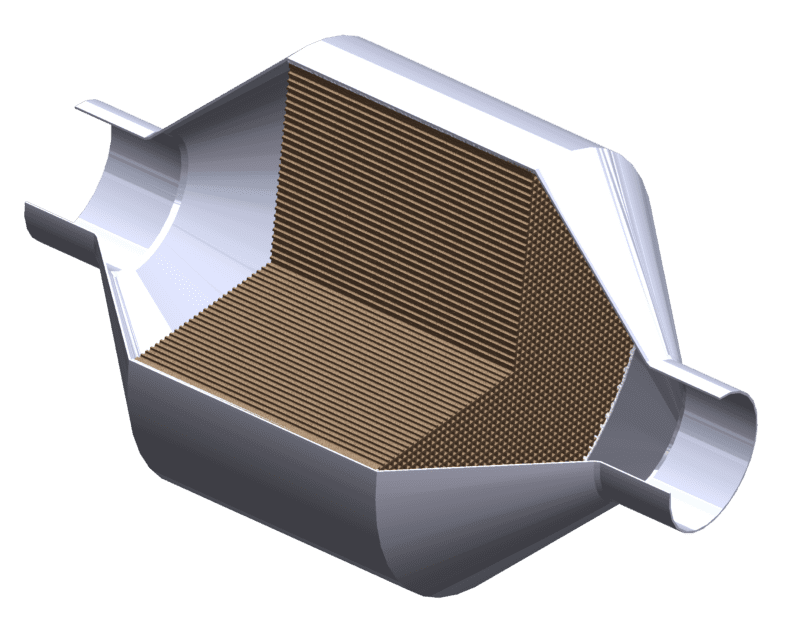
Removes toxic emissions from exhaust gases such as carbon monoxide and hydrocarbons.
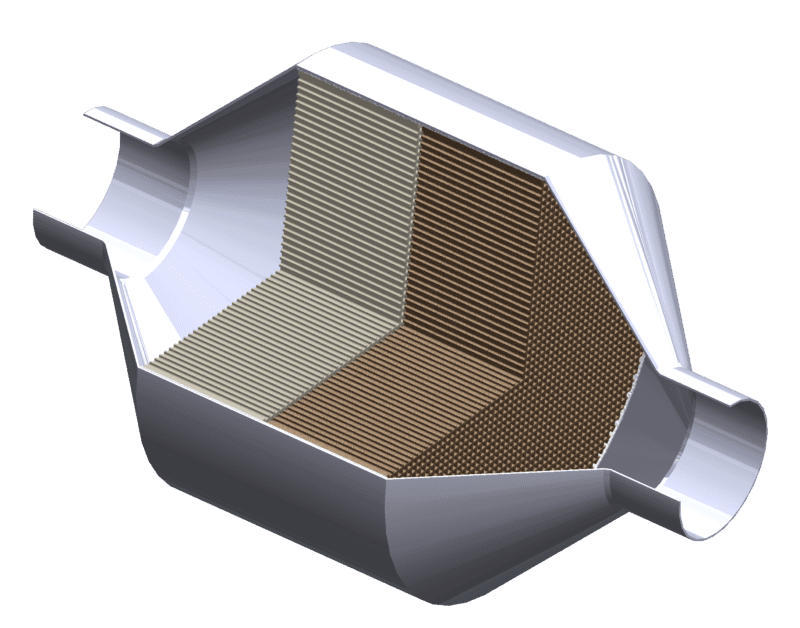
Partially filters diesel particulate matter over 60% – for best results use in conjunction with DOC.
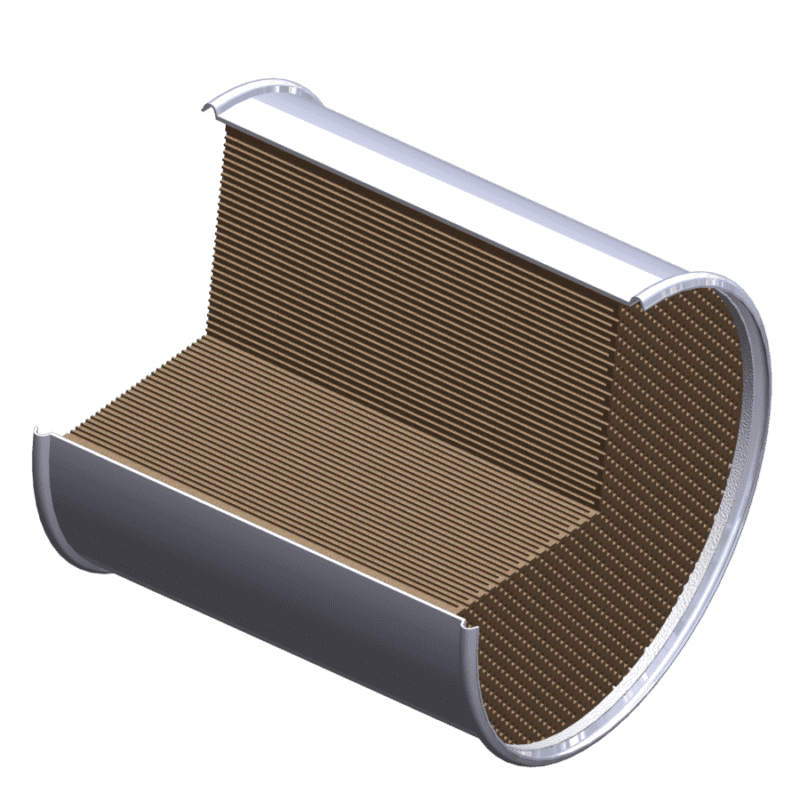
Completely traps over 99% of diesel particulate matter – for best results use in conjunction with DOC.
Diesel Exhaust Emissions come from engines burning diesel fuel. It is a complex mixture of gaseous vapours, liquid aerosols and particulate substances. These substances are the products of combustion.
Gases and vapours, like nitrogen, oxygen, water vapour and carbon dioxide, are found in air. There are also hazardous chemicals nitrous oxide, nitrogen dioxide, sulphur dioxide and carbon monoxide.
Fine particles known as Diesel Particulate Matter (DPM) including fine carbon particles – hazardous chemicals known as poly aromatic hydrocarbons (PAHs) adhere to the surface of carbon particles. DPM can act like a gas and stay airborne for long periods of time.
Can penetrate deep into the respiratory system, producing inflammation, narrowing of the airways leading to deprivation of oxygen for everyday bodily functions.
It is a poisonous, colourless, odourless and tasteless gas. In large amounts, this can over come you in minutes, without warning causing you to lose consciousness and suffocate.
Can be so fine (less than 1-micron diameter) that it penetrates deep into the respiratory system which can lead to heart and lung damage.
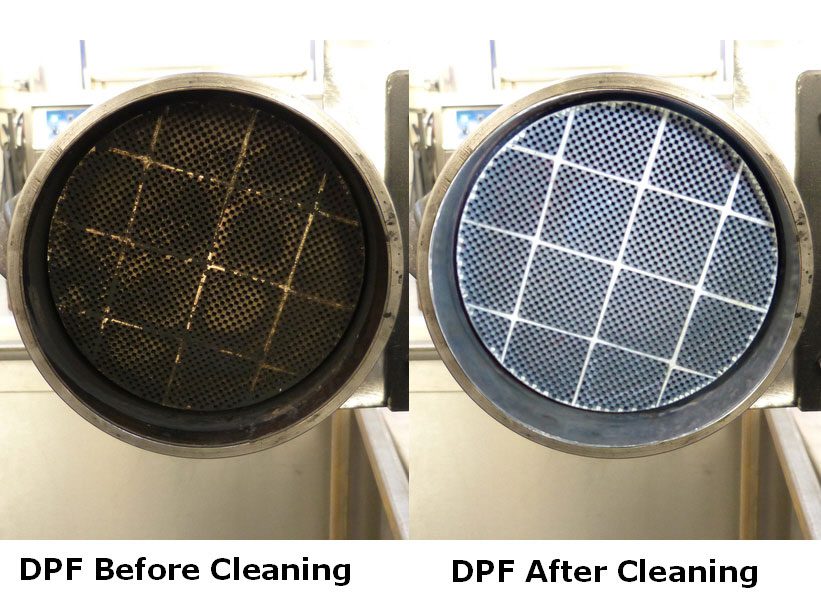
We offer a full tailored maintenance and cleaning schedule for DPFs of all shapes and sizes. We also offer a spare replacement while this is being carried out.
There is value in the regular maintenance of your DPF. We also recommend using high-grade manufacturer spec oil in the engine which has lasting benefits not only to the vehicle life but also to the DPF, due to cleaner emission on combustion.
DPFs will be rendered useless and unrepairable if a maintenance schedule is not followed. This could potentially lead to further damage to the asset over time.
Backpressure Monitors and Data Loggers provide the operator with a real-time indication of backpressure and will sound an alarm when pressure exceeds the recommended amount.
Service personnel can also download a history of backpressure from a selected time frame to see the trends and patterns for further diagnostics.
For this, we use the latest and most trusted equipment available.When a machine is operating at high revs, it will create heat and activate the catalyst pre the DPF. This creates even more heat stimulating passive regeneration of the DPF.
Yes, it is advisable to cover them for two reasons. One, to reduce the external temperature. Two, to keep the internal heat up making the DPF work more effectively.
Yes, most DPF combinations are stamped with a flow direction indicator. This is because most have a Catalyst incorporated inline which can only allow flow one way.
No, a well maintained DPF will not make any difference to an engine’s performance. A blocked DPF may cause increased back pressure which could affect the engine’s performance and requires immediate attention.
Manufacturers strongly recommend the use of high quality Non-Bio fuels.
No, our DPF’s are tailored to fit both specific engine capacity and physical restrictions.
Yes, DPF’s are proven to eliminate 70-99% of diesel particulate matter depending on the type of DPF (partial or wall-flow).
If you have any questions regarding Diesel Emission Control and DPFs you can send us a message or call us on 1800 624 088.

Please enter your details and we will get back to you with a quote and freight cost.